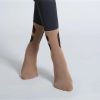
All Common Life Questions About Grip Socks - Meta Description Summary
Whether it’s relaxing at home, doing yoga or Pilates, daily exercise, or even recovering in the hospital, grip socks have gradually become a “must-have item” for many people. Unlike ordinary socks, the core function of their non-slip design at the bottom is to increase friction between the feet and the ground or shoes, avoid slipping and injury, while being comfortable and breathable. However, many people have various questions when they come into contact with them for the first time: “What’s the real difference between them and ordinary socks?” “How to choose them without making mistakes?” “Will the non-slip effect disappear after many washes?” This article combines daily use experience to explain all the most frequently asked questions in detail, with no professional terms, only practical tips to help you really use grip socks correctly.
I. Basic Understanding of Grip Socks: 3 Questions Beginners Must Clarify First
1.1 What Are Grip Socks? Is There an Essential Difference from Ordinary Socks?
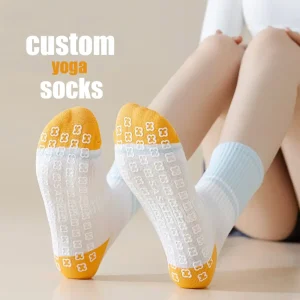
Simply put, grip socks are “functional socks with a non-slip design at the bottom”. The core difference is not in the fabric (they have the same materials as ordinary socks, such as cotton and blends), but in the non-slip technology at the bottom—most are particles or patterns made of silicone or rubber, and a few are special non-slip fabrics, designed to enhance traction and prevent foot sliding.
Here’s the most intuitive example: Wearing ordinary socks at home on tile floors, you can easily slip if you’re not careful; but with grip socks, even at the slippery bathroom door, you can stand firmly. In addition, ordinary socks focus on decoration and basic warmth, while grip socks are more “functional”. In addition to non-slip, many styles also have arch support and thickened cushioning, suitable for scenarios that require stable feet, such as yoga, football, gym training, or home use by the elderly and children.
1.2 Can Grip Socks Really Prevent Slipping? How Effective Are They?
The answer is: Yes, but the non-slip effect depends on the scenario and the quality of the socks themselves. Not all grip socks are “universally non-slip”.
1.2.1 Differences in Non-Slip Effect in Different Scenarios
Home, yoga studio, gym (dry ground): The non-slip effect is the most obvious. The silicone particles at the bottom can firmly fit the smooth ground. When doing yoga stretches, squats, or tiptoes, your feet will not shift, which is much safer than being barefoot or wearing ordinary socks. This is also one of its most practical scenarios;
Slippery ground (bathroom, kitchen): It has a certain non-slip effect, but it is not as good as professional non-slip shoes. After all, its fabric will absorb water, and the non-slip force will decrease slightly when wet. It is not recommended to wear it alone for a long time in severely slippery places;
Inside shoes (sports such as football and basketball): Worn inside sports shoes, it can reduce the sliding of feet inside the shoes, avoid blisters and foot rubbing, and at the same time enhance the fit between the feet and the sports shoes, making force application smoother. Many athletes wear them with sports shoes.
1.3 Who Are Grip Socks Suitable For? Is It Necessary for Ordinary People to Buy Them?
They are not a “niche item”. As long as you have the need for “non-slip, anti-rubbing, and stable feet”, you can buy them. They are especially suitable for these groups of people:
1.3.1 Must-Buy Groups
Yoga, Pilates, and ballet enthusiasts: They need stable foot force to avoid slipping affecting movements, and at the same time protect their feet from being rubbed by yoga mats and equipment;
The elderly and children: The elderly have inconvenient legs and feet, and wearing them at home can reduce the risk of falling; children are active, and wearing them can prevent foot sliding when running and jumping, while keeping warm and not pressing the feet;
Athletes (football, basketball, running, etc.): Reduce friction between feet and shoes, prevent blisters and foot rubbing, and enhance the stability of force application;
People recovering from surgery or with inconvenient legs and feet: Most hospital floors are smooth, and wearing grip socks can increase a sense of security and avoid slipping and injury when getting out of bed.
1.3.2 Groups That Can Buy On Demand
Ordinary people at home: If your home has tile or wood floors that are easy to slip, wearing them will make you more at ease; if it’s a carpeted floor, the non-slip demand is not high, and ordinary socks are enough;
People who often go on business trips or stay in hotels: Hotel floors are smooth, and disposable slippers have poor non-slip effect. Taking a pair of grip socks is both hygienic and safe.
II. Grip Socks Buying Tips: Avoid These Mistakes and Choose the Right One Without Wasting Money
2.1 How to Choose the Fabric? Which Is Better: Pure Cotton or Blend?
The fabric of grip socks directly affects wearing comfort and durability. There’s no need to blindly pursue “100% pure cotton”; choosing according to your needs is more appropriate. Combining daily wearing experience, we have sorted out the advantages and disadvantages of different fabrics for beginners to refer to directly:
2.1.1 Pure Cotton Fabric (Cotton Content Over 80%)
Advantages: Soft and skin-friendly, good sweat absorption, no stuffiness when worn for a long time, suitable for people with sensitive skin, daily home use or spring and autumn;
Disadvantages: Easy to deform and pill, slight shrinkage after washing, less elastic than blended fabrics, not suitable for high-intensity sports (it will stick to the feet when sweating a lot).
2.1.2 Cotton Blend Fabric (Cotton + Spandex/Polyester, Cotton Content 60%-80%)
Advantages: Good elasticity, not easy to deform or pill, wear-resistant and durable, and most have quick-drying function, suitable for sports, summer or frequent washing scenarios. It is also the most mainstream fabric on the market currently;
Disadvantages: Slightly less skin-friendly than pure cotton. If the spandex content is too high, the sweat absorption will decrease. When buying, pay attention to the ingredient list; the best spandex content is 5%-10%.
2.1.3 Special Fabrics (Bamboo Fiber, Modal)
Advantages: Softer and more sweat-absorbent than pure cotton, good antibacterial properties, suitable for people with sensitive skin and sweaty feet;
Disadvantages: Higher price, general durability, easy to wear, not suitable for high-intensity sports, more suitable for home and casual wear.
2.2 How to Judge the Non-Slip Design? Which Is More Practical: Particles or Patterns?
The core of the non-slip effect is the “bottom non-slip design”. It’s not that the more particles or the more complex the pattern, the better. The key lies in “coverage rate” and “material hardness”. Beginners remember these 2 points:
2.2.1 Non-Slip Particles (Most Common, Cost-Effective)
Priority is given to particles that “cover the entire sole of the foot”, with uniform size and moderate hardness (too hard will press the feet, too soft will easily fall off). Silicone material is more durable and has better non-slip effect than rubber material, and is not easy to turn yellow.
Pitfalls to avoid: Don’t choose “partial particles” (such as only on the toes and heels), the non-slip effect is poor and easy to slip; also don’t choose particles that are too fine, they will easily stick to dust after absorbing sweat and are inconvenient to clean.
2.2.2 Non-Slip Patterns (Suitable for Sports and High-Intensity Use)
Grip socks with pattern designs (such as stripes, grids, wave patterns) have stronger friction than particle styles, suitable for sports that require quick force application and frequent movement, such as football and basketball. They can better fit sports shoes and reduce foot sliding.
Note: Most pattern styles are relatively thick and may be stuffy when worn at home daily; choose according to your needs.
2.3 How to Choose the Size? Which Is More Suitable: One Size Fits All or Sized?
Many people step on the “size pit” when buying grip socks: either too big, so the non-slip particles can’t fit the sole of the foot, or too small, which pinches the feet and affects blood circulation. The correct selection method is very simple:
2.3.1 Priority to Sized Styles (Better Fit, Better Non-Slip Effect)
Sized styles will mark the specific shoe size range (such as US5-7, US8-10). When buying, compare your usual shoe size and choose a slightly looser one (reserve 1-2cm space to avoid shrinkage and pinching after washing).
Special reminder: For people with high insteps or wide feet, it is recommended to choose one size larger; for people with thin feet, choose according to the normal shoe size, no need to deliberately choose larger.
2.3.2 One Size Fits All (Suitable for Temporary Wear and Lazy Shopping)
Many grip socks on the market are marked “One Size Fits US6-12”, suitable for people with standard foot shapes who usually wear sizes 37-43. The advantage is that you don’t have to worry about the size; the disadvantage is that the fit is not as good as sized styles, and people with special foot shapes are prone to ill-fitting.
2.4 Beginners’ Buying Pitfalls: Never Buy These 3 Types of Socks
2.4.1 Those with Easy-to-Fall-Off Non-Slip Particles
Some low-priced grip socks have particles glued on, which start to fall off after a few washes. They not only lose the non-slip effect, but the fallen small particles may also be accidentally eaten by children, or stick to the floor and yoga mat, which is difficult to clean.
2.4.2 Those with Rough Fabric and Poor Breathability
Some socks use inferior chemical fiber fabrics to save costs, which feel rough and hard. Wearing them for a long time will make feet stuffy and rubbed, and even cause skin discomfort, especially not suitable for people with sensitive skin.
2.4.3 Those Without Elasticity and Easy to Shrink
Grip socks without spandex have poor elasticity, become loose after wearing for a long time, and lose fit; while inferior pure cotton socks shrink severely after washing, and the originally suitable size may not be wearable after washing.
III. Daily Use of Grip Socks: These Details Determine Comfort and Service Life
3.1 What Should Be Noted When Wearing Grip Socks? Avoid These Wrong Operations
3.1.1 Don’t Wear Wet Grip Socks for a Long Time
Whether soaked by sweat or accidentally wetted by water, you should replace them in time. Wet grip socks not only have reduced non-slip effect, but also are easy to breed bacteria and produce odor. Wearing them for a long time may cause athlete’s foot and skin itching.
3.1.2 Don’t Wear Them Directly on Dirty Feet or Wounds
Do not wear grip socks when there are wounds or athlete’s foot on the feet, as it will affect wound healing and may aggravate athlete’s foot symptoms; before wearing, it is best to wash the feet and keep them dry and clean.
3.1.3 Don’t Wear Too Thick Grip Socks During Exercise
During high-intensity exercise, the feet will sweat a lot. Too thick grip socks will become heavy after absorbing sweat, stick to the feet, affect force application, and easily rub the feet. It is recommended to choose thin, quick-drying sports-style grip socks.
3.2 How to Choose Grip Socks for Different Scenarios? Precise Matching Is More Practical
3.2.1 Home Scenario: Priority to Soft, Breathable and Thin Styles
For home wear, there’s no need to pursue high-intensity non-slip. The focus is on comfort and breathability. Choose pure cotton or cotton blend fabrics with thin design and moderate particles on the sole of the foot. They can not only prevent slipping, but also not make feet stuffy. The color and style can be chosen according to your needs, and they also look good with home clothes.
3.2.2 Yoga and Pilates Scenarios: Choose Thin, Full-Sole Non-Slip and Arch Support Styles
These scenarios require flexible foot force and fit with the yoga mat. Choose thin, quick-drying fabrics with full-sole non-slip particles, preferably with arch support design, which can reduce foot pressure, make movements more stable, and avoid slipping or foot soreness.
3.2.3 Sports Scenarios (Football, Basketball, Etc.): Choose Thick, Patterned Non-Slip and Wear-Resistant Styles
During exercise, the feet exert great force and are easy to rub against sports shoes. Choose thick, wear-resistant cotton blend fabrics with bottom pattern non-slip design, which can enhance the fit with sports shoes, reduce sliding, and at the same time thicken cushioning to reduce foot impact, avoiding blisters and foot rubbing.
3.2.4 Elderly and Children Scenarios: Choose Soft, Loose and Particle Non-Slip Styles
The elderly have sensitive skin and inconvenient legs and feet, while children have delicate skin and are active. Priority is given to pure cotton fabrics that are soft and skin-friendly, with loose size to avoid pinching the feet. The particles on the bottom are non-slip (do not choose too hard ones), which can not only prevent slipping, but also not press the feet.
IV. Grip Socks Cleaning and Maintenance: Do This to Make the Non-Slip Effect Last Longer
4.1 How to Clean Grip Socks? Both Hand Washing and Machine Washing Have Skills
Many people directly throw grip socks into the washing machine with ordinary socks when washing. After washing many times, they will find that the non-slip particles fall off, the socks deform, and the non-slip effect decreases. In fact, as long as you pay attention to these points, you can extend their service life.
4.1.1 Hand Washing (Recommended, Best for Protecting Non-Slip Particles)
The steps are very simple: first, use cold or warm water (water temperature not exceeding 30℃, high temperature will damage the silicone particles and fabric elasticity), add a small amount of mild laundry detergent, and soak the socks for 5-10 minutes;
Gently rub the surface and bottom of the socks, do not rub the non-slip particles hard (to avoid falling off), and focus on cleaning the toes, heels and other easily dirty parts;
After cleaning, rinse thoroughly with clean water, do not leave laundry detergent residue (residue will irritate the skin and damage the fabric);
Gently squeeze out the water, do not wring it dry (wringing dry will cause the socks to deform and the non-slip particles to fall off), and lay it flat in a well-ventilated place to dry.
4.1.2 Machine Washing (Occasionally Acceptable, Pay Attention to Protection)
If you don’t have time to hand wash, you must pay attention when machine washing: turn the grip socks inside out (non-slip particles inward), put them into a laundry bag to avoid friction with other clothes, which will cause the particles to fall off;
Choose the “gentle mode”, adjust the water temperature to cold or below 30℃, do not use strong mode or high-temperature cleaning;
Do not add bleach or softener (bleach will damage the fabric and non-slip particles, and softener will reduce the non-slip effect);
After washing, take it out in time, lay it flat to dry, and do not soak it in the washing machine for a long time.
4.2 Drying and Storage: Avoid These 2 Mistakes
4.2.1 Don’t Expose to Direct Sunlight or Dry in a Dryer
Many people put their socks directly in the sun to dry or in a dryer after washing, which will seriously damage the grip socks: high temperature will make the silicone particles age, harden and fall off, and also make the fabric shrink, deform and fade;
Correct method: Lay it flat in a well-ventilated and cool place to dry, avoid direct sunlight, and store it in time after drying, do not expose it to the sun for a long time.
4.2.2 Don’t Squeeze or Fold the Non-Slip Particles When Storing
When storing, do not fold the socks hard, especially do not squeeze the non-slip particles at the bottom, to avoid deformation and falling off of the particles; you can lay the socks flat or roll them up gently and put them into the drawer, avoid placing them with other sharp objects to prevent scratching the non-slip particles.
4.3 What to Do If the Non-Slip Effect Deteriorates? Can It Still Be Worn?
After wearing and washing grip socks for a long time, the non-slip effect will gradually decrease, which is a normal phenomenon (silicone particles will naturally age and wear). You can judge whether to continue wearing them according to the situation:
4.3.1 Slight Wear (A Few Particles Fall Off, Non-Slip Effect Decreases Slightly)
If only a few particles fall off and the non-slip effect can still meet the needs of home and casual wear, you can continue to wear them. Pay more attention to cleaning and maintenance at ordinary times to avoid further wear;
4.3.2 Severe Wear (Most Particles Fall Off, Almost No Non-Slip Effect)
If most of the non-slip particles have fallen off and you can obviously slip when wearing them on smooth ground, it is not recommended to continue wearing them, especially for sports, the elderly and children, which are easy to slip and cause injury. It is safer to replace them with new ones in time.
V. Answers to Common Concerns About Grip Socks: Eliminate All Your Doubts
5.1 Will Grip Socks Make Feet Stuffy or Sweat a Lot?
No, the key lies in the fabric. Choosing the right fabric can completely avoid the problem of stuffy feet.
Tips to avoid stuffy feet: Priority is given to sweat-absorbent and breathable fabrics such as pure cotton and bamboo fiber; choose thin, quick-drying blended fabrics in summer and during exercise, and avoid all chemical fiber fabrics; when wearing them at ordinary times, do not keep them stuffy in shoes for a long time, you can wear them directly at home to keep your feet ventilated, and replace them in time after sweating.
5.2 Can Grip Socks Be Machine Washed? Will They Deform After Many Washes?
Yes, they can be machine washed, but you need to pay attention to the method (refer to the machine washing skills in Part IV). Whether they deform after many washes depends on the fabric and cleaning method.
Tips to prevent deformation: Choose blended fabrics containing spandex (good elasticity, not easy to deform); use cold water and gentle mode when washing, do not wring dry or expose to direct sunlight; roll them up gently when storing, do not squeeze hard.
Can Children and Pregnant Women Wear Grip Socks? Are There Any Safety Hazards?
Yes, and it is highly recommended. As long as you choose the right style, there are no safety hazards.
Children’s styles: Choose pure cotton fabric that is soft and skin-friendly, with round and non-easy-to-fall-off non-slip particles, and loose size to avoid pinching the feet. Do not choose styles with small decorations (such as small beads) to prevent children from accidentally eating them;
Pregnant women’s styles: Choose loose, breathable styles with arch support, and moderate non-slip particles at the bottom, which can reduce the risk of slipping for pregnant women when staying at home or walking, and at the same time reduce foot edema pressure.
5.4 Compared with Ordinary Socks, Are Grip Socks Cost-Effective? Are They Worth Buying?
They are very cost-effective and worth buying, especially for people with non-slip needs.
Although the price of grip socks is slightly higher than that of ordinary socks (about $1-3 per pair), they are more functional. They can avoid slipping and injury, blisters and foot rubbing, and their service life is longer than that of ordinary socks (with correct maintenance, they can be worn for 6-12 months). Whether for home use, sports, or use by the elderly and children, they are more practical and safer than ordinary socks, and are actually more cost-effective in the long run.
Conclusion: Use Grip Socks Correctly to Unlock a More Secure Life Experience
In fact, grip socks are not that “delicate” and do not have so many complicated knowledge points. The core is to “choose the right style, clean correctly, and use on demand”. Their existence is not to pursue trends, but to bring more sense of security and comfort to our daily life and sports—no need to worry about slipping at home, no need to worry about foot rubbing during sports, and more peace of mind for the elderly and children to use.
I hope this article can answer all your questions about grip socks, help you avoid mistakes, choose the right pair for yourself, and let grip socks really integrate into your daily life and become an indispensable practical item.
-
Crew socks
Women Indoor Fitness Activities Anti Slip Yoga Socks
$0.99 - $1.99 Select options This product has multiple variants. The options may be chosen on the product page -
Uncategorized
Women Winter Anti Slip Pilates Yoga Five Finger Socks
$0.79 - $0.99 Select options This product has multiple variants. The options may be chosen on the product page -
Crew socks
Wholesale Yoga Shock-Absorbing Anti Slip Pilates Socks
$0.69 - $0.89 Select options This product has multiple variants. The options may be chosen on the product page -
Tube socks
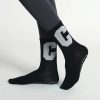
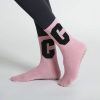
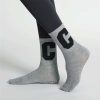
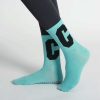
Women Mid Tube Non-Slip Yoga Letter C Sports Fitness Pilates Socks
$0.89 - $1.39 Select options This product has multiple variants. The options may be chosen on the product page