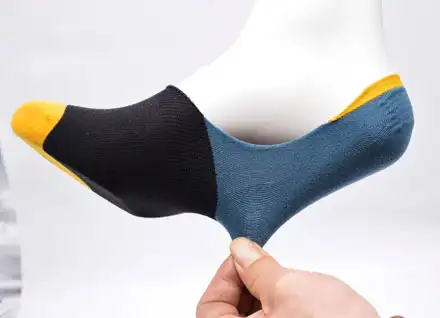
No-Show Socks That Stay Put: 5 Hidden Design Secrets to Stop Heel Slipping

Nearly everyone who wears no-show socks has dealt with the frustration: you put them on, slip into your shoes, and within 10 minutes, the heel slides down into the sole, leaving you stopping to readjust them over and over.

The problem isn’t cheap fabric or “one-size-fits-all” labeling—it’s lazy, one-dimensional design. Generic invisible socks are cut flat, use random silicone strips, and ignore how feet actually move when walking, standing, or running.

Below are the 5 real design secrets we engineered specifically to stop heel slippage, built from actual footwear anatomy and sock manufacturing testing, not internet trends.

Secret 1: Strategic 3-Point Silicone Grip (Not a Generic Full Band)


The Flaw with Standard Silicone Bands

 
Most no-show socks use a thin, full-circle silicone strip around the entire heel. This design fails for two reasons: it traps sweat, loses grip as moisture builds up, and creates unnecessary bulk that rubs against shoe linings.
 

Our Precision-Placed Silicone Solution

 
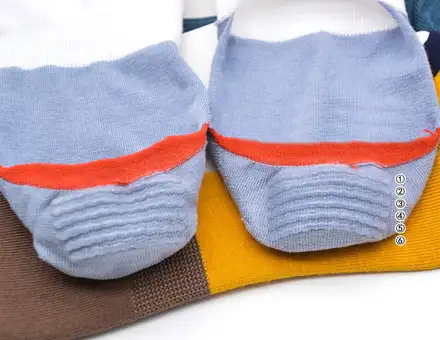
We use a targeted 6-point silicone placement instead of a full band:
 
  • One small silicone patch on the inner heel bone
  • Two narrower strips on the outer side heel curves
     

    This matches the natural shape of the human heel, grips only where contact with the shoe is strongest, and avoids sweat buildup that breaks down traction. The silicone is medical-grade, soft (not sticky or irritating), and tested to hold grip through 8+ hours of wear without peeling.

Secret 2: 3D Contoured Heel Cup for Natural Foot Anatomy


Flat Cutting = Constant Slippage

 
Virtually all cheap invisible socks are cut from a flat, 2D pattern. Human heels are rounded, curved, and uneven—so a flat piece of fabric can never hug the heel properly. It shifts immediately as your foot flexes.
 

Anatomical Heel Shaping for a Locked-In Fit


Our no-show socks are crafted with a 3D molded heel cup, created using digital foot scans to match the average heel’s curve and depth.


During knitting, we add a subtle triangular dart at the back heel to create depth, so the sock wraps around the heel instead of laying flat against it. This structural shape acts like a gentle “holder” that moves with your foot, not against it.

Stick-with-invisible-socks

Secret 3: Zoned Stretch Spandex Blending (Tight Where It Counts, Soft Where It Matters)


One-Size-Fits-All Elastic Fails

 
Socks that use the same stretch across the entire foot either squeeze too tight (cutting off circulation) or are too loose (sliding immediately). Generic spandex blending doesn’t account for how different parts of the foot need different support.
 

Targeted Compression Zones

 
We blend varying percentages of spandex and combed cotton in specific zones:
 
  • Arch area: 20% spandex for mild, supportive compression to keep the sock anchored to the midfoot
  • Heel & toe areas: 8% spandex for flexible, non-restrictive stretch that moves with your foot
  • Top opening: 15% spandex to hold the sock edge in place without digging into skin
     

    This zoned stretch means the sock stays secure without feeling tight, eliminating the downward pull that causes slippage.

Secret 4: Invisible Seamless Binding on the Top Opening


Rolling Edges = Socks That Slide Down

 
A common overlooked issue is the top edge of the no-show sock: unfinished or thick seams roll downward as you walk, dragging the entire heel with them. This is why even socks with silicone often fail.
 

Ultra-Flat, Non-Curl Binding

 
We use a seamless circular binding process on the sock’s opening:
 
  • No thick, stitched seams that fold over
  • Ultra-thin, flexible binding that lies flat against the instep
  • Heat-set edge treatment to prevent curling or folding
     

    The edge stays in its original position all day, so there’s no downward force pulling the heel into your shoe.

Secret 5: Precision Shallow Cut Placement + Non-Slip Sole Micro-Tread


Wrong Length = Visible Socks + Slippage

 
Too long, and the sock bunches; too short, and it slides off the heel entirely. Most brands guess the cut length, leading to socks that either show above shoes or slip constantly.
 

Calibrated Shallow Sizing + Grippy Sole Texture

 
First, we calibrated the shallow cut length to within 2mm of accuracy for US shoe sizes 5–11, so the sock edge sits exactly below the shoe line, no visibility and no extra fabric to shift.
 
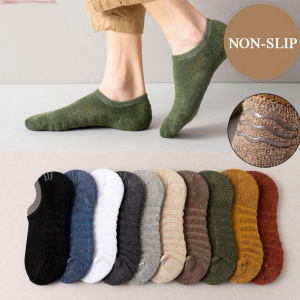
Second, we add a subtle knitted micro-tread on the sole (not silicone, which can feel bumpy):
 
  • Tiny, raised cotton loops that create gentle friction between the sock and shoe insole
  • No uncomfortable texture, no squeaking, just enough grip to stop minor sliding
     

    This works with the heel grip to keep the entire sock stable, not just the back.

Final Thoughts: Small Design Details = No More Slipping

 
The difference between a no-show sock that stays put and one that fails isn’t fancy marketing—it’s paying attention to how feet move, how fabric behaves, and how small construction changes eliminate the root causes of slippage.
 
Every detail on our invisible socks is tested for real daily wear, not just to look good in photos. No more stopping to adjust your socks, no more heel slide, just comfortable, hidden support all day long.

FAQs About Non-Slip No-Show Socks


Do these silicone grips irritate the heel?

 
No—our 3-point silicone is soft, medical-grade, and only placed where the heel naturally touches the shoe, avoiding direct friction against sensitive skin.
 

How long do the non-slip features last?

 
With proper care (machine wash cold, no fabric softener), the grip and shaping last for 50+ wears, far longer than generic silicone-band socks.
 

Can these fit both men and women’s shoe sizes?

 
Yes—our zoned stretch and contoured heel are designed to adapt to both men’s and women’s foot shapes, with sizing calibrated for US 5–13 shoes.
Scroll to Top