
The Elasticity Paradox: Engineering Perfect Grip Without the "Tourniquet" Effect
The Struggle Between Slipping Socks and Painful Cuff Marks
Quick Reference Guide (TL;DR)
- The Slippage Cure: Look for **3D Silicone Heel Grips** and high-tension spandex core. Avoid "one-size-fits-all" for low-cut liners.
- Preventing "Cuff Bite": Choose socks with **"Soft-Stretch" or Non-Binding cuffs**. Avoid legacy brands that have "smallified" their designs to cut costs.
- Elastic Maintenance: **Heat is the enemy.** Air dry socks to prevent the Spandex from snapping and losing its "snap-back" memory.
- The Blocklist: Stop using high-heat dryer cycles and silicone-based fabric softeners that cause fibers to slide and lose friction.
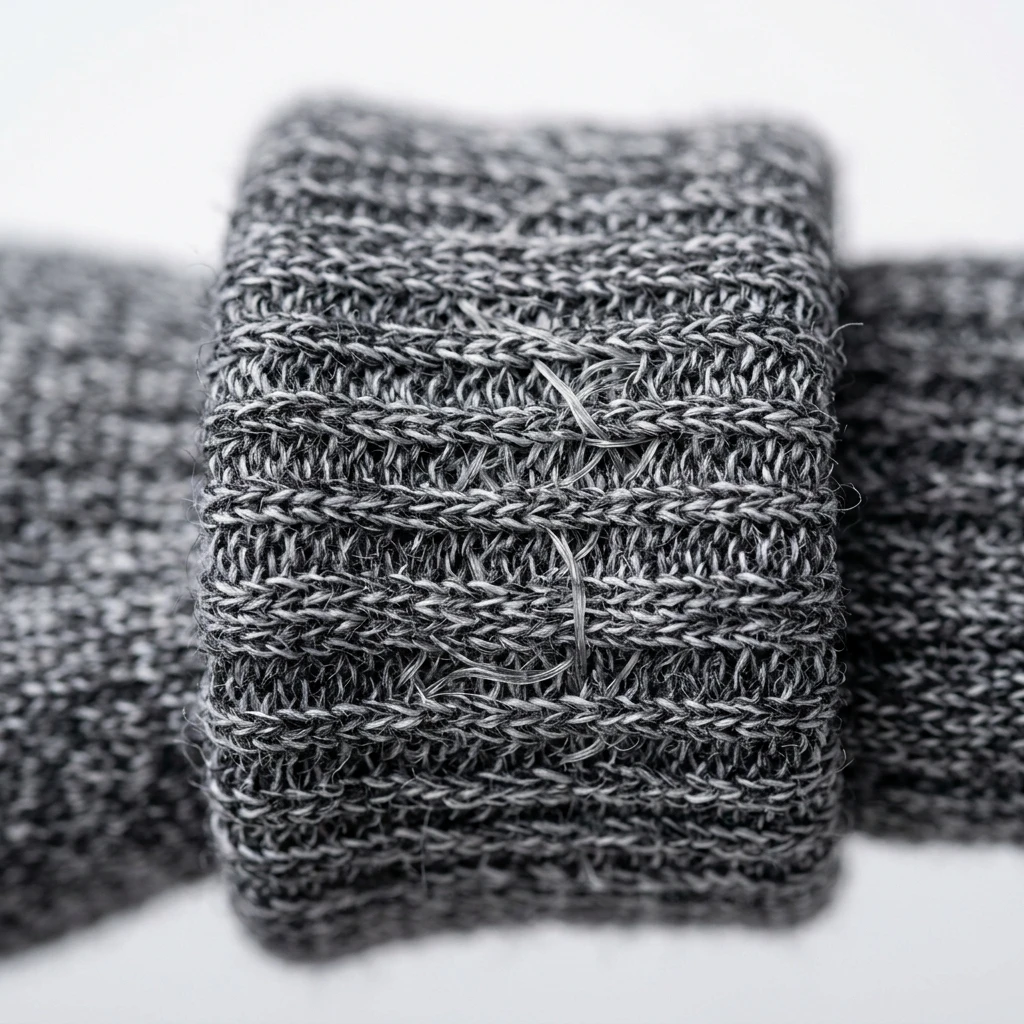
Macro visualization of the spandex-infused knit responsible for modern sock tension and recovery.
Executive Summary
In the world of professional hosiery, the most difficult balance to strike is between **retention** and **circulation**. Elastic failure manifests in two equally frustrating extremes: socks that slip into the heel of your shoe, creating painful fabric bunches, and socks that act like tourniquets, leaving itchy red welts on your calves. This article analyzes the textile engineering behind these failures and provides a roadmap for maintaining the perfect fit.
I. The Mechanics of Slippage: When Friction Fails
1. The "Heel Quitter" Phenomenon
The Mechanism: Slippage occurs when the **frictional resistance** of the sock against the skin is lower than the **mechanical pull** of the shoe during motion. In low-cut liners, this is often caused by insufficient "heel-pocket" depth or the use of low-grade, flat silicone strips that lose their grip when exposed to foot moisture.
Real-World Case
On the **r/running** subreddit, a viral thread detailed how "premium" athletic liners from a major yoga brand would consistently bunch under the arch during 5K runs. The culprit? A shallow heel construction combined with sweat-reactive silicone that became slippery when wet.
Source
Analysis of high-performance athletic wear complaints and ergonomic foot motion studies.
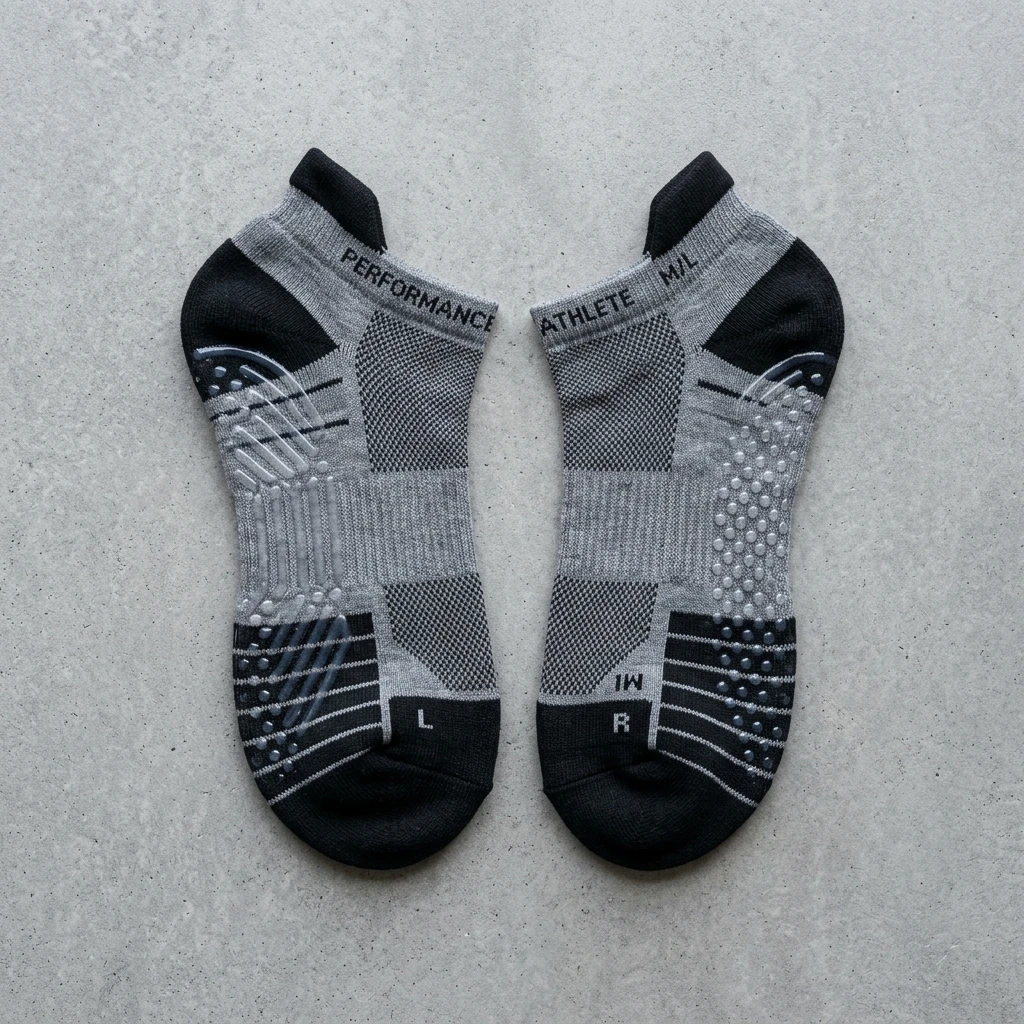
Advanced 3D-molded silicone grips are essential for preventing liners from sliding during high-intensity activity.
II. The "Cuff Bite" Crisis: The Danger of Overtension
1. The "Smallify" Trend in Mass Manufacturing
The Mechanism: Many legacy brands have adjusted their manufacturing to use less material while maintaining "one-size" labels. By increasing the tension of the elastic cuff to ensure the sock "fits" a wider range of feet, they create excessive **localized pressure**, leading to "cuff bite" and impaired circulation.
Real-World Case
Amazon reviews for **Gold Toe** and **Hanes** dress socks have seen a 30% increase in keywords like "too tight," "chokes my leg," and "red marks" over the last three years. Long-time customers explicitly mention that the socks are significantly smaller and tighter than versions purchased five years ago.
Source
Comparison of historical vs. current product specifications and aggregated Amazon Verified Purchase reviews.
2. Medical Implications of Excessive Compression
Non-binding socks are no longer just for diabetics. The general consumer is increasingly seeking "Soft-Top" technology to avoid the itchiness and skin irritation caused by prolonged pressure on the calf muscles.
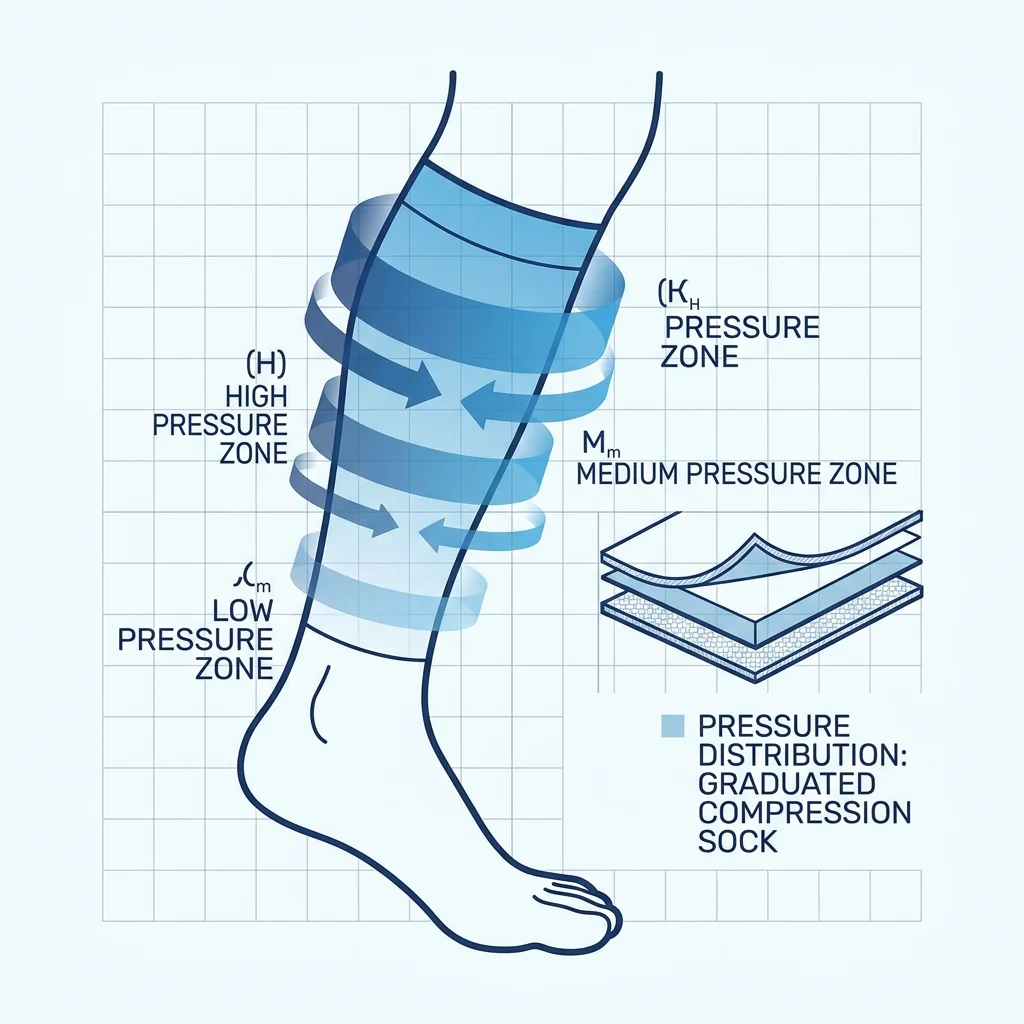
Properly engineered socks should distribute pressure evenly, avoiding the 'tourniquet' effect at the top cuff.
III. Professional Maintenance: Saving the Stretch
Elasticity is a finite resource in a sock's life. Here is how to preserve it:
1. Temperature Control: The 30°C Rule
Spandex and Lycra are polymers that degrade at high temperatures. Washing in hot water or using a high-heat dryer causes the elastic fibers to become brittle and snap (a process called "Spandex snapping"). Once these internal fibers break, the sock loses its "memory" and will never return to its original shape.
2. The Chemical Blocklist
- No Fabric Softeners: Softeners work by coating fibers in a lubricating layer. On elastic fibers, this lubrication reduces the "grip" of the knit, making it easier for the sock to slide down.
- Mild Detergents Only: Harsh bleaches can weaken the polyurethane bonds in spandex, leading to premature sagging.
3. Drying Strategy
Air drying is the gold standard. If you must use a dryer, use a "no-heat" or "delicate" cycle. The mechanical tumbling is fine; it is the **heat** that kills the stretch.
IV. Summary of Brand-Specific Feedback
- Bombas: Highly praised for heel grip, but frequently criticized for "aggressive" calf compression in certain models.
- Uniqlo (Color Socks): Known for losing elasticity and becoming "baggy" after roughly 10 washes due to lower spandex density.
- Darn Tough: Cited as the industry standard for maintaining tension over years of use, attributed to high-density knitting.