
What is a Knitted Sock?
A knitted sock is a seamless tubular garment crafted by interlocking yarn loops using knitting technology, designed to cover and protect the foot while providing comfort, warmth, and functionality . Unlike woven socks, its structure is formed by continuous looped yarns (rather than interlaced warp/weft threads), enabling inherent stretch, breathability, and a snug fit to the foot’s contours .
It can be produced via hand knitting or industrial machinery, using natural fibers (cotton, wool, mohair), synthetic fibers (nylon, polyester, spandex), or blended materials to meet diverse usage scenarios .
Detailed Breakdown: Key Elements of Knitted Socks
1. Knitting Technology: Weft vs Warp Knitting
The two fundamental knitting methods define the sock’s performance and application:
- Weft Knitting: The most common technique for everyday socks. Yarn is fed horizontally to form loops across the sock’s width, allowing easy production of ribbed, plain, or patterned designs . It offers excellent stretch but may unravel if a loop breaks (known as “runs”) . Industrial circular knitting machines or hand tools (5 double-pointed needles, 2 circular needles) are used .
- Warp Knitting: Yarns are fed vertically, creating interlocking vertical loops on alternate sides . This method produces more durable, run-resistant socks ideal for sportswear, compression socks, or medical use (e.g., diabetic socks) . It’s primarily used in industrial flatbed machines for high-performance products .
2. Core Structure of a Knitted Sock
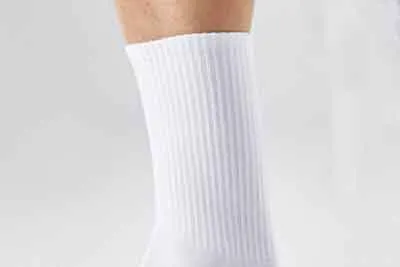
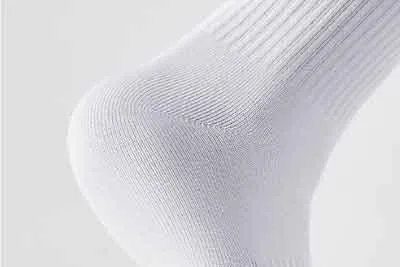
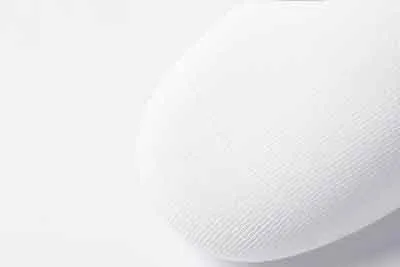
A professional knitted sock comprises 7 functional sections, each engineered for specific purposes :
Section
image
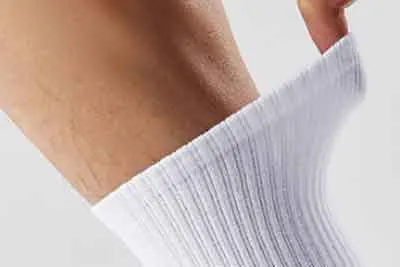
Cuff
Top elastic band (usually ribbed or with spandex) to prevent slipping without constriction .
Leg
Heel Flap & Turn
Gusset
Foot
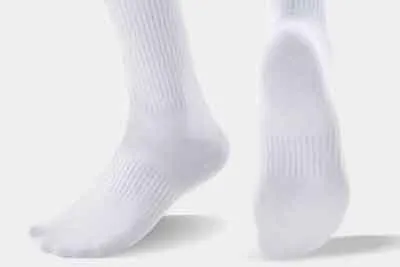
Toe
3. Material Selection: Performance-Driven Blends
Knitted socks’ quality depends on fiber composition, tailored to use cases :
- Natural Fibers:
- Cotton (60-80%): Soft, breathable, ideal for daily wear.
- Wool/Mohair: Warm, moisture-wicking, suitable for cold weather .
- Silk: Luxurious, lightweight, used in premium dress socks.
- Synthetic Fibers:
- Nylon/Polyester (15-30%): Enhances durability and shape retention .
- Spandex (2-5%): Delivers stretch and recovery for a snug fit .
- Recycled Polyester: Eco-friendly option with equivalent performance .
- Functional Additives: Antimicrobial treatments (prevents odor), moisture-wicking finishes (for sports), and non-binding cuffs (for medical socks) .
4. Production Process: From Yarn to Finished Sock
As a seasoned factory, our industrial workflow ensures consistency and quality :
- Yarn Preparation: Blending, twisting, and dyeing (dope-dyed for colorfastness).
- Circular Knitting: Seamless tube formation on computerized machines (100-200 needles) with programmed patterns.
- Heel/Toe Shaping: Automated increasing/decreasing stitches or hand-finished grafting.
- Reinforcement: Adding extra yarn at high-wear areas via double-knitting.
- Finishing: Washing (softening), drying, steaming (shape setting), and quality inspection (loop integrity, size accuracy).
- Functional Treatments: Antimicrobial coating or compression grading (for specialty socks).
5. Common Types of Knitted Socks
Knitted socks adapt to diverse needs :
- Everyday Wear: Ankle/crew socks (cotton-nylon blend, weft-knitted).
- Sports Socks: Cushioned soles, moisture-wicking (polyester-spandex, warp-knitted).
- Medical Socks: Diabetic socks (non-binding, seamless toes) or compression socks (graduated pressure).
- Specialty Socks: Toe socks (five-finger design), thermal socks (wool-rich), and dress socks (silk-cotton blend).
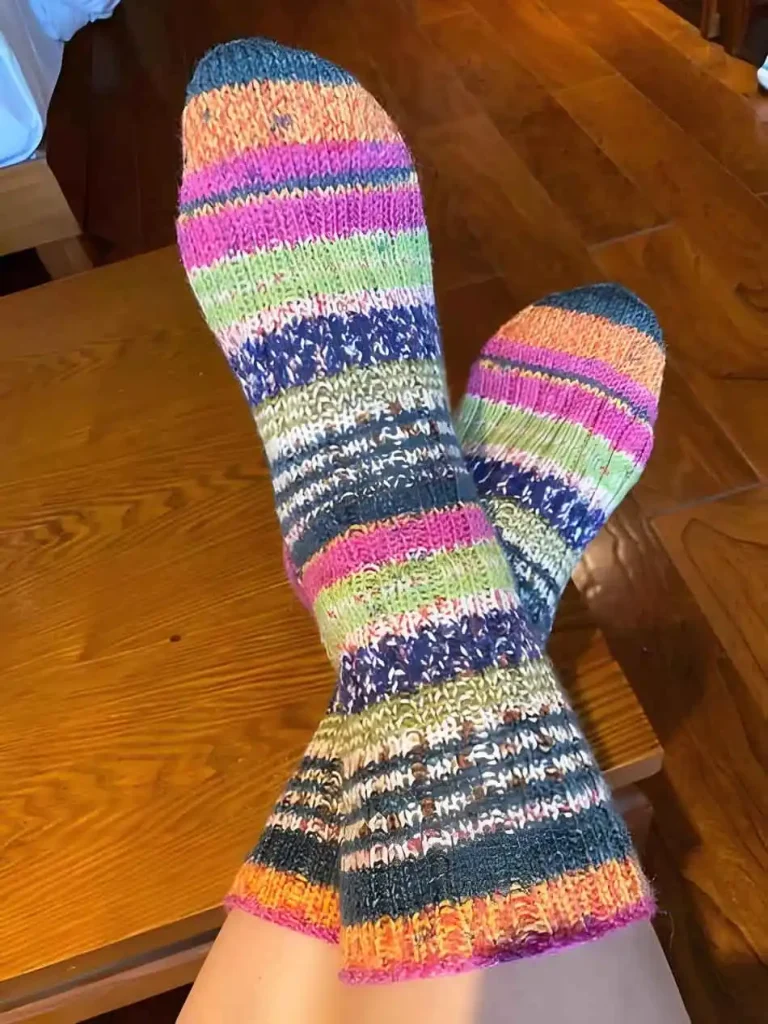
Hand knitted socks and machine knitted socks are completely different

If you want to customize your own knitted logo, you can check out our Custom Knitted Socks page, which provides detailed information on the customization process and some of the socks we have previously customized. This will give you some inspiration.